7 Must-Have Customer Retention Tools for 2025 Success
13 novembre 2025
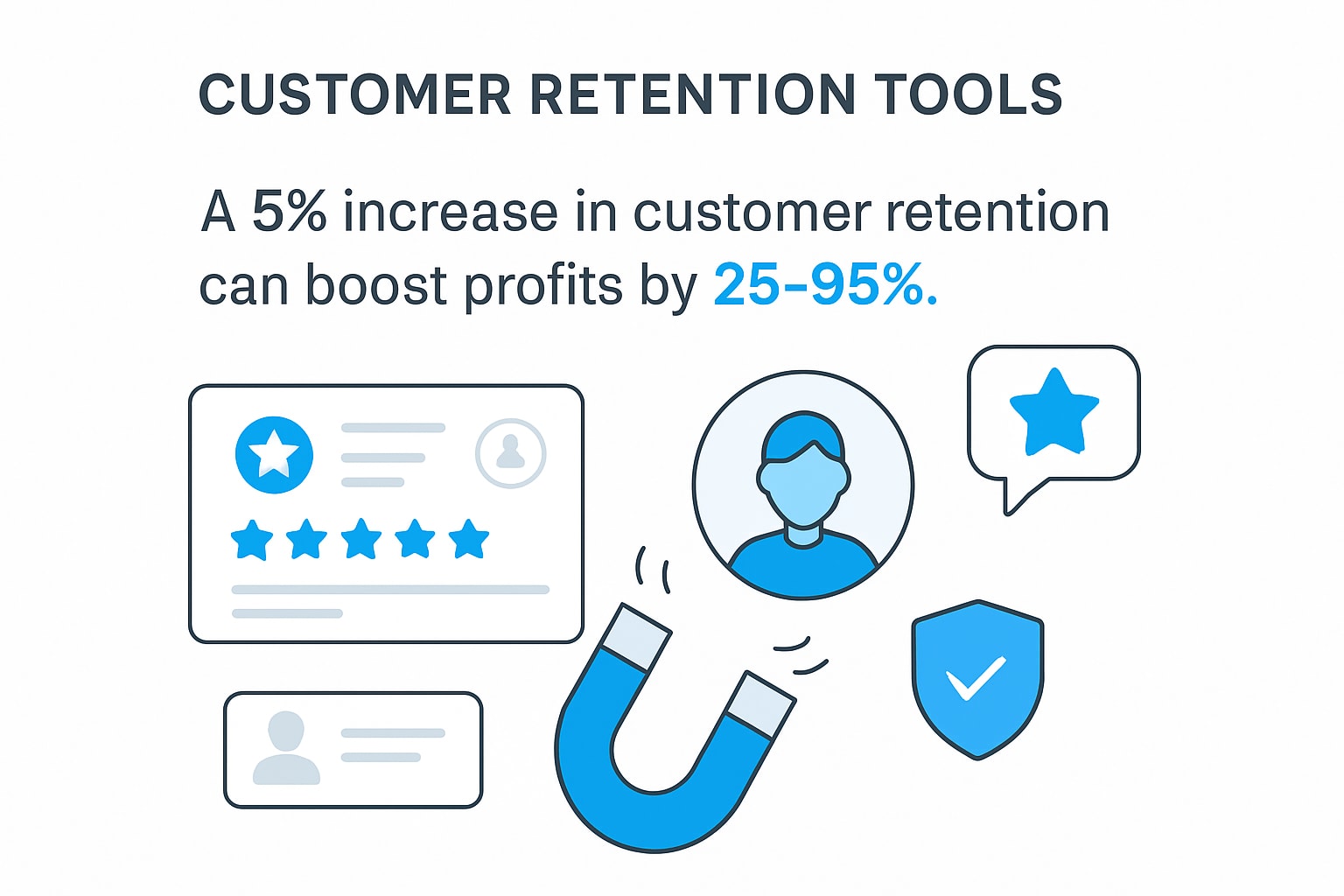
Did you know that businesses lose over $1.6 trillion each year due to customer churn? As we move into 2025, the cost of losing customers keeps rising, making retention more critical than ever. Rapid digital transformation means customer expectations are at an all-time high, and brands must adapt quickly to stay competitive.
Investing in the right customer retention tools gives you a clear edge. These solutions can help foster loyalty, improve lifetime value, and turn satisfied customers into brand advocates.
In this article, you will discover the 7 must-have customer retention tools for 2025. Each tool is paired with actionable insights, covering analytics, automation, feedback, and reputation management. Get ready to elevate your retention strategy.
Why Customer Retention Should Be Your Top Priority in 2025
Customer retention tools are not just a convenience, they are a necessity for modern businesses facing rising acquisition costs and rapidly shifting customer expectations. In 2025, the brands that prioritize retention will outperform competitors in profitability and growth.
The Rising Cost of Customer Acquisition
The cost of acquiring a new customer has surged by over 60% in the past five years, squeezing margins across industries. As digital ad prices climb and competition intensifies, relying solely on acquisition is no longer sustainable. Customer retention tools offer a strategic advantage by focusing resources on keeping existing customers engaged and loyal.
Research shows that a modest 5% increase in retention can boost profits by as much as 25% to 95%. For more on these trends, see the latest customer retention statistics and insights. The bottom line: investing in retention is more cost-effective than chasing new leads.
The Impact of Retention on Business Growth
High retention rates drive recurring revenue and maximize customer lifetime value. Companies that leverage customer retention tools often see compounding growth, as loyal customers make repeat purchases and refer others.
Brands like subscription retailers and SaaS providers have built sustainable success by nurturing existing relationships. Positive word-of-mouth and referrals generated by satisfied customers can become a powerful engine for long-term expansion.
Shifting Customer Expectations in 2025
Digital transformation and AI-driven personalization have raised the bar for customer experiences. In 2025, buyers expect seamless, omnichannel journeys, fast support, and proactive engagement at every touchpoint.
Customer retention tools are essential for meeting these demands. They enable real-time feedback collection, automated communications, and tailored offers that delight users and foster loyalty.
Key Retention Metrics to Track
To measure the effectiveness of customer retention tools, focus on key metrics:
Metric | Benchmark (E-commerce) | Benchmark (SaaS) |
|---|---|---|
Churn Rate | < 5% | < 7% |
Repeat Purchase Rate | > 25% | N/A |
NPS | 50+ | 40+ |
CSAT | 80%+ | 85%+ |
Engagement Score | High | High |
Monitoring these figures helps identify strengths and areas for improvement, ensuring your retention strategy delivers measurable results.
The Role of Technology in Retention
Modern customer retention tools harness automation, AI, and analytics to identify at-risk customers and trigger timely interventions. For example, an e-commerce brand using predictive analytics might flag users likely to churn, then launch targeted campaigns to re-engage them.
Case studies show that tech-driven retention strategies can reduce churn and increase customer satisfaction. By integrating these tools into your business processes, you create a proactive, data-driven approach to loyalty and growth.
7 Must-Have Customer Retention Tools for 2025 Success
Choosing the right customer retention tools is crucial for businesses aiming to build loyalty, reduce churn, and maximize customer lifetime value in 2025. The landscape is more competitive than ever, and the right technology can give you a decisive edge. Below, you will find a detailed breakdown of the 7 essential customer retention tools every forward-thinking brand should consider this year.
To help you compare at a glance, here’s a summary table of the top customer retention tools featured in this guide:
Tool | Best For | Starting Price | Key Features | Notable Benefit |
|---|---|---|---|---|
Inflate | Reviews & Reputation | $9/mo | Unified review requests, AI analytics | 3x more reviews |
ActiveCampaign | Marketing Automation | $29/mo | Email/SMS automation, CRM | 15% lift in repeat buys |
Zendesk | Omnichannel Support | $49/agent/mo | Chat, bots, knowledge base | 18% churn reduction |
Contentsquare | Experience Analytics | Custom | Heatmaps, journey mapping | 12% higher retention |
Appcues | Onboarding | $249/mo | No-code flows, in-app messaging | 20% boost in week 1 retention |
Crazy Egg | UX Optimization | $29/mo | Heatmaps, A/B testing | 14% more engagement |
Qualaroo | Feedback Collection | $80/mo | In-app surveys, NPS, sentiment | 25% better experiment success |
Let’s dive into each tool, exploring how these customer retention tools can power your growth strategy in 2025.
Inflate
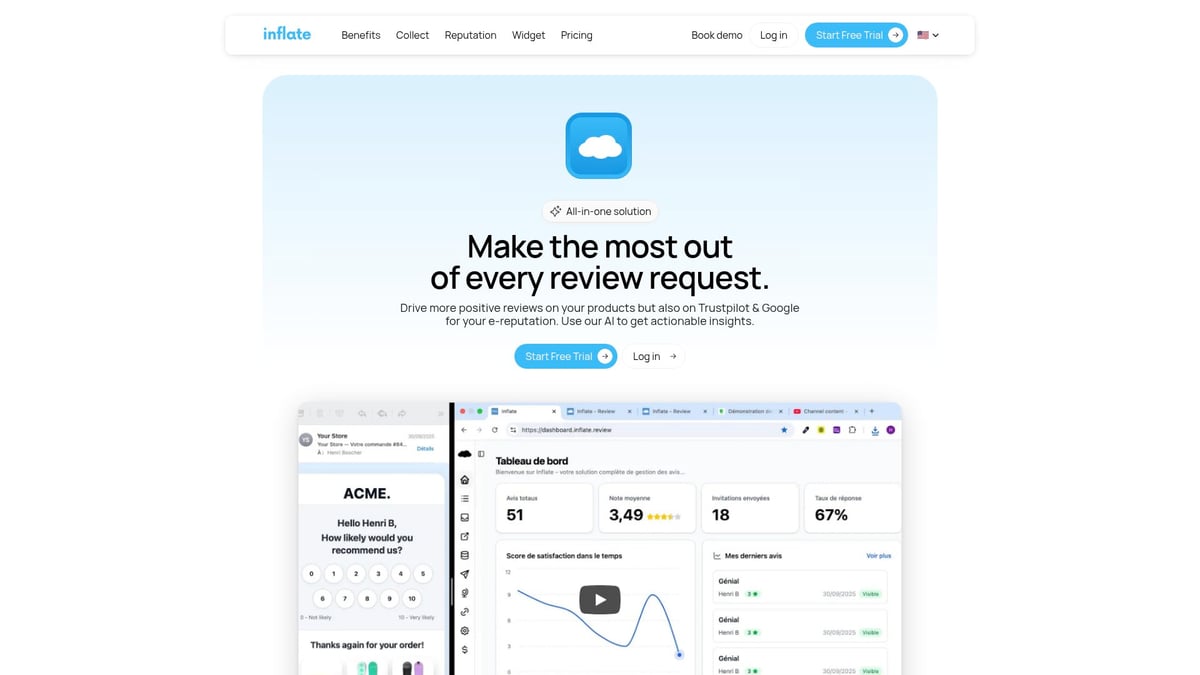
Inflate stands out among customer retention tools as a unified platform focused on maximizing your online reputation and social proof. Its pricing is designed for flexibility, with Starter ($9/mo for 500 requests), Business ($24/mo for 10,000 requests), and Enterprise ($49/mo, unlimited) plans, plus a 14-day free trial.
Core Features:
Unified review requests across product, Trustpilot, and Google
AI-powered analytics and actionable insights
Customizable review widgets for web and email
Ambassador activation tools to turn loyal customers into advocates
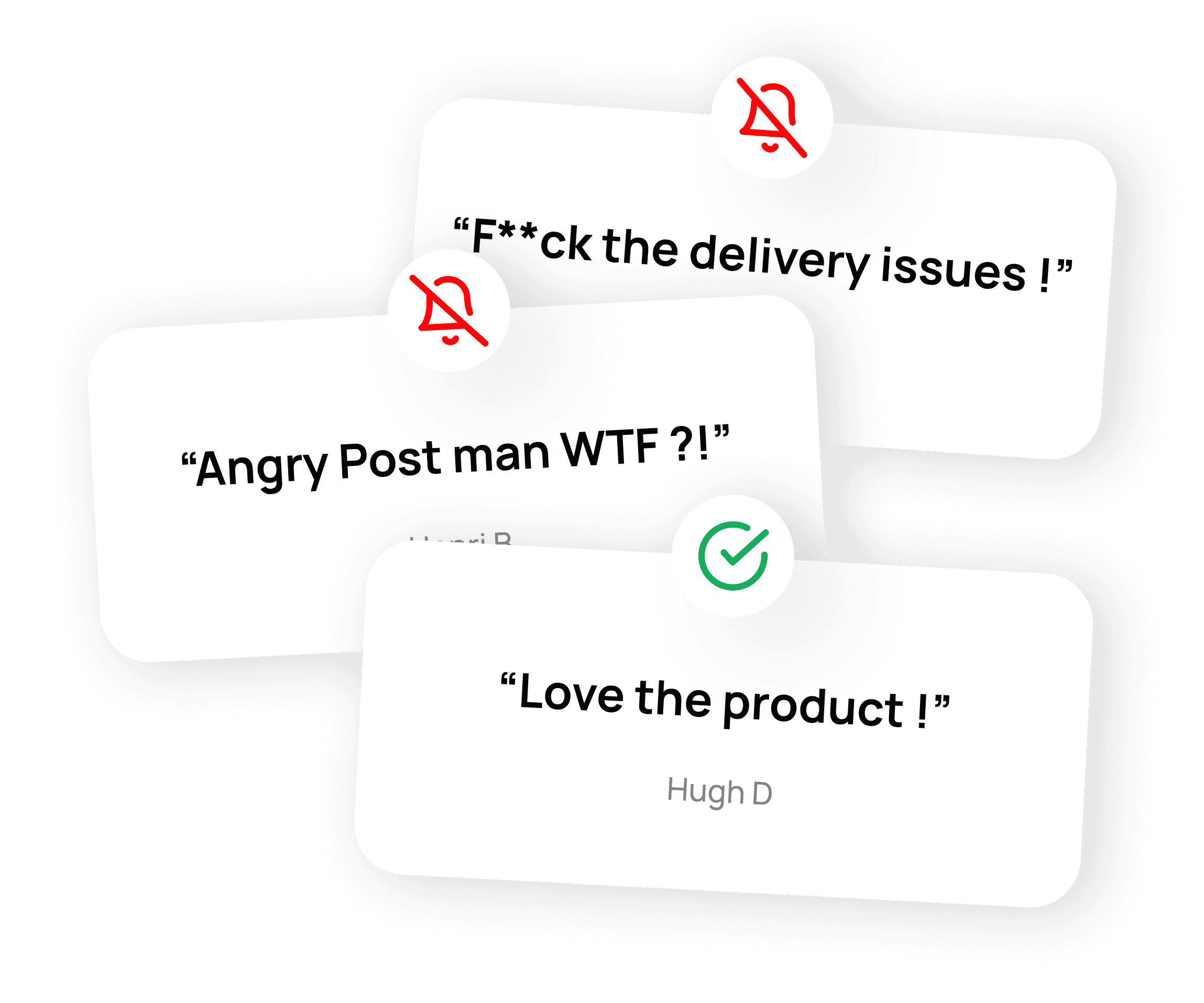
Detractor shield for intercepting negative feedback before it goes public
Benefits: Brands using Inflate report up to 3x more reviews collected, a 30% conversion uplift, and improved reputation scores. The platform’s private detractor management helps protect your brand while boosting customer loyalty.
Target Audience: E-commerce merchants (with a Shopify focus), marketing teams, SMBs, and scaling brands that rely on review-driven growth.
Use Cases:
Post-purchase review collection
Boosting Trustpilot and Google ratings
Intercepting negative feedback to resolve issues privately
Showcasing social proof directly on product pages
Pros: All-in-one solution, easy integration, affordable pricing, powerful AI insights, and high customization.
Cons: Primarily optimized for e-commerce and brands invested in reputation management.
Example: A Shopify brand using Inflate increased Trustpilot reviews by 200% and achieved a 20% NPS boost within three months.
Inflate is especially effective when paired with a broader customer retention strategies guide, ensuring your review collection efforts are part of a holistic retention program.
ActiveCampaign
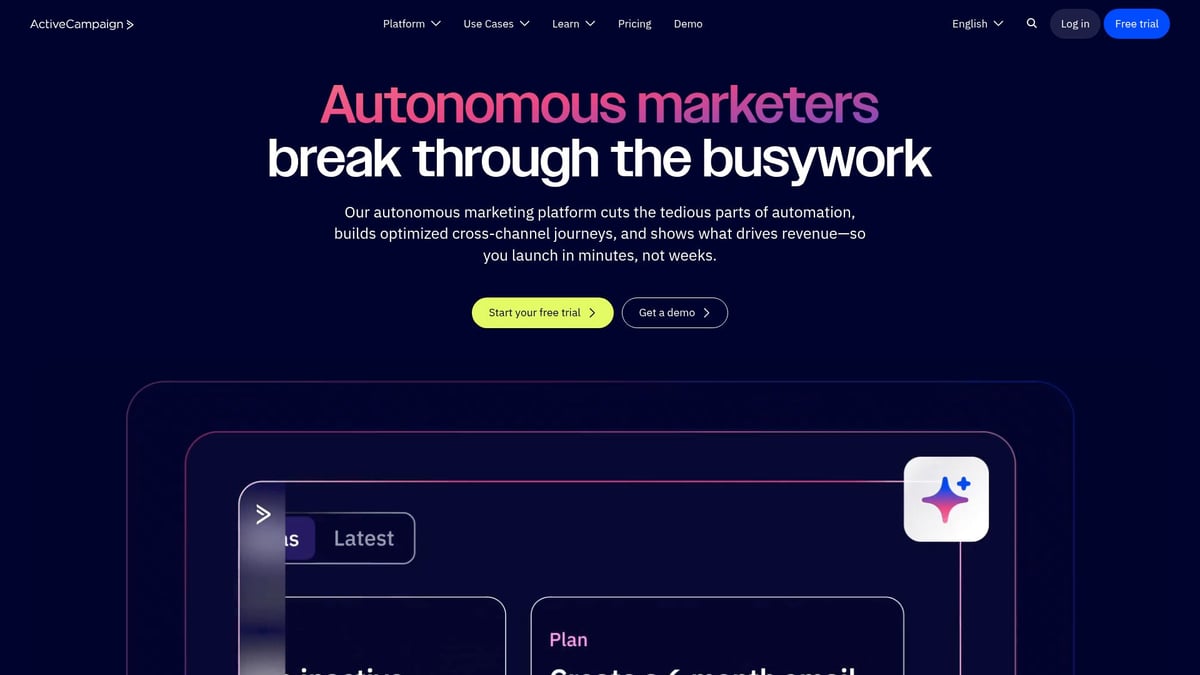
ActiveCampaign is one of the most versatile customer retention tools for businesses seeking advanced automation and personalized engagement. Plans start at $29 monthly, scaling with contacts and features.
Core Features:
Comprehensive email and SMS automation
Visual customer journey mapping
Built-in CRM for unified customer data
Advanced segmentation and engagement tracking
Personalized messaging across channels
Benefits: ActiveCampaign empowers brands to drive repeat purchases through targeted campaigns and reduces churn with automated win-back sequences. Deep segmentation allows for laser-focused messaging.
Target Audience: SMBs to enterprises in e-commerce, SaaS, and service industries.
Use Cases:
Abandoned cart recovery
Re-engagement campaigns for lapsed customers
Post-purchase follow-ups to nurture loyalty
Triggering loyalty program rewards
Pros: Robust automation, deep personalization, and integrations with over 870 platforms.
Cons: Steeper learning curve for advanced features, with some options reserved for higher-tier plans.
Example: A retailer implemented personalized automation flows and saw a 15% increase in repeat purchase rates.
For brands prioritizing scalable, data-driven engagement, ActiveCampaign is a foundational customer retention tool.
Zendesk
Zendesk is an industry leader among customer retention tools for omnichannel support. Suite plans start at $49 per agent per month, making it accessible for teams of all sizes.
Core Features:
Multichannel support: chat, email, social, and voice
Self-service knowledge base
AI-powered bots for instant answers
Customer satisfaction (CSAT) and NPS tracking
Automated ticket routing and analytics
Benefits: Zendesk accelerates support resolution, improves CSAT, and scales seamlessly as your team grows. Its analytics help identify trends and optimize service delivery.
Target Audience: E-commerce, SaaS, and customer service teams from startups to enterprises.
Use Cases:
Proactive customer support
Automated ticket management
Collecting and analyzing customer feedback
Monitoring support team performance
Pros: Comprehensive feature set, easy to scale, strong ecosystem of integrations.
Cons: Costs can rise with advanced features, and setup may be complex for smaller teams.
Example: A SaaS company reduced churn by 18% after launching self-service and live chat with Zendesk.
Zendesk is essential for brands aiming to provide fast, effective support, a hallmark of leading customer retention tools.
Contentsquare
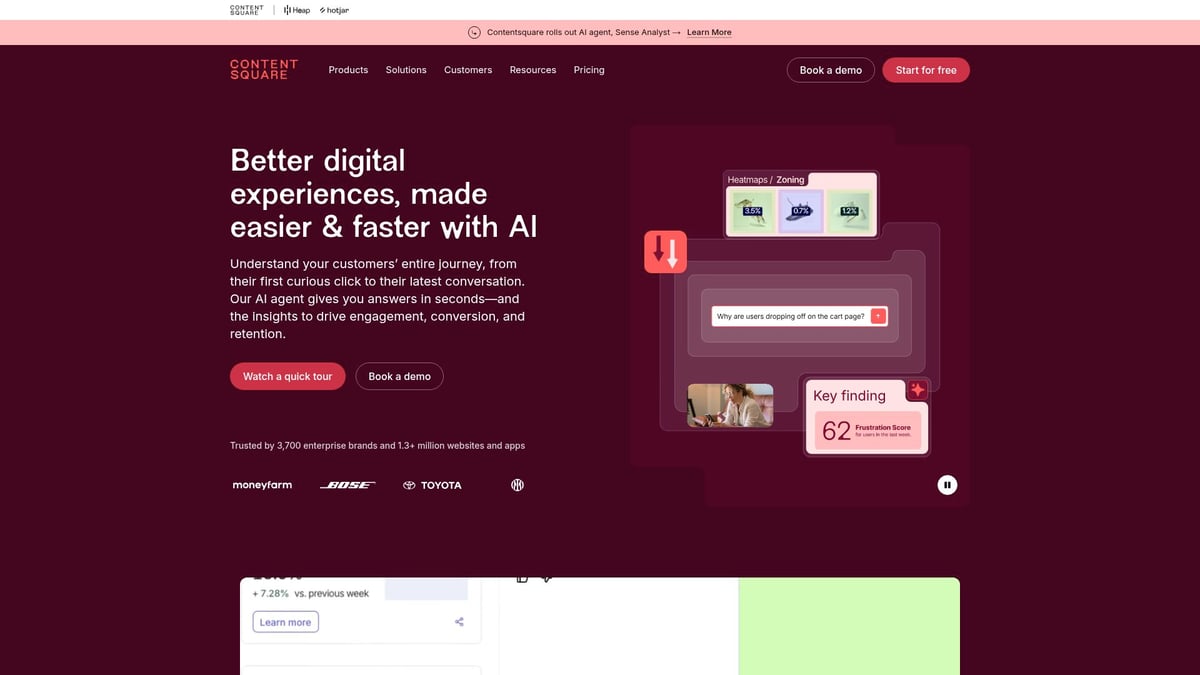
Contentsquare distinguishes itself in the customer retention tools landscape with deep behavioral analytics and user journey mapping. Pricing is custom, based on site traffic and feature needs.
Core Features:
Experience analytics and heatmaps
Session replay to visualize user behavior
Comprehensive journey mapping
Retention analytics and real-time surveys
Benefits: Contentsquare pinpoints friction points and uncovers the root causes of churn. This enables data-driven UX improvements that directly impact retention and conversion.
Target Audience: Enterprises, digital marketers, UX teams, e-commerce, and SaaS businesses with high traffic.
Use Cases:
Optimizing website and checkout flows
Gathering post-purchase feedback
Conducting churn analysis
Gaining insights into conversion funnels
Pros: Powerful visual analytics, deep behavioral insights, and ideal for large-scale operations.
Cons: Premium pricing; best leveraged by high-traffic or enterprise brands.
Example: A retailer used Contentsquare to optimize its checkout process, increasing customer retention by 12%.
For businesses wanting to understand the “why” behind user actions, Contentsquare is a top customer retention tool.
Appcues
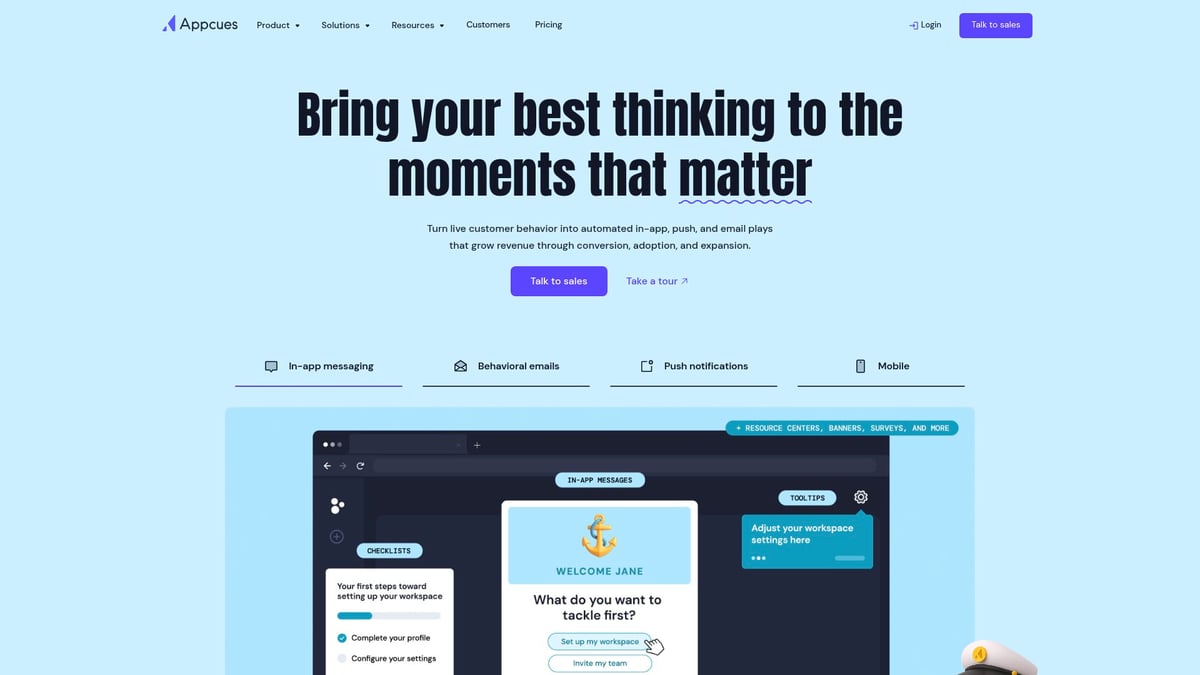
Appcues is a leading choice among customer retention tools for onboarding and product adoption. Pricing starts at $249 per month for Essentials, with custom quotes for larger needs.
Core Features:
No-code onboarding flow builder
In-app messaging for feature announcements
Detailed feature adoption analytics
NPS and feedback collection modules
Benefits: Appcues helps reduce onboarding friction, speed up time-to-value for new users, and boost adoption of new product features, resulting in lower early-stage churn.
Target Audience: SaaS companies, product managers, growth teams, and onboarding specialists.
Use Cases:
User onboarding for new products
Highlighting new or underused features
Creating interactive product tours
Collecting NPS and feedback post-onboarding
Pros: Intuitive interface, quick deployment, and actionable analytics.
Cons: Higher entry price; best suited for SaaS and digital-first businesses.
Example: A startup implemented personalized onboarding with Appcues and saw a 20% increase in first-week user retention.
If streamlined onboarding is a priority, Appcues is a must-have customer retention tool for 2025.
Crazy Egg
Crazy Egg is a visual analytics platform that excels in identifying UX friction, making it an indispensable member of the customer retention tools family. Pricing is accessible, starting at $29 monthly for Basic and scaling up to $249 for Pro.
Core Features:
Heatmaps and scrollmaps for visualizing user journeys
Website recordings to watch real user interactions
A/B testing for rapid optimization
Confetti reports for granular click analysis
Benefits: Crazy Egg makes it easy to spot and resolve usability issues, driving improvements in user experience and engagement that keep customers coming back.
Target Audience: Marketers, UX/UI designers, e-commerce brands, and businesses of all sizes.
Use Cases:
Landing page and checkout optimization
Improving conversion rates
Analyzing and removing friction points
Pros: User-friendly, highly visual data, affordable plans.
Cons: Lacks advanced analytics found in more premium platforms; manual interpretation required for data.
Example: A SaaS company used Crazy Egg’s heatmaps to refine its onboarding flow, increasing returning visitor engagement by 14%.
For brands aiming to fine-tune their digital experience, Crazy Egg is a practical customer retention tool.
Qualaroo
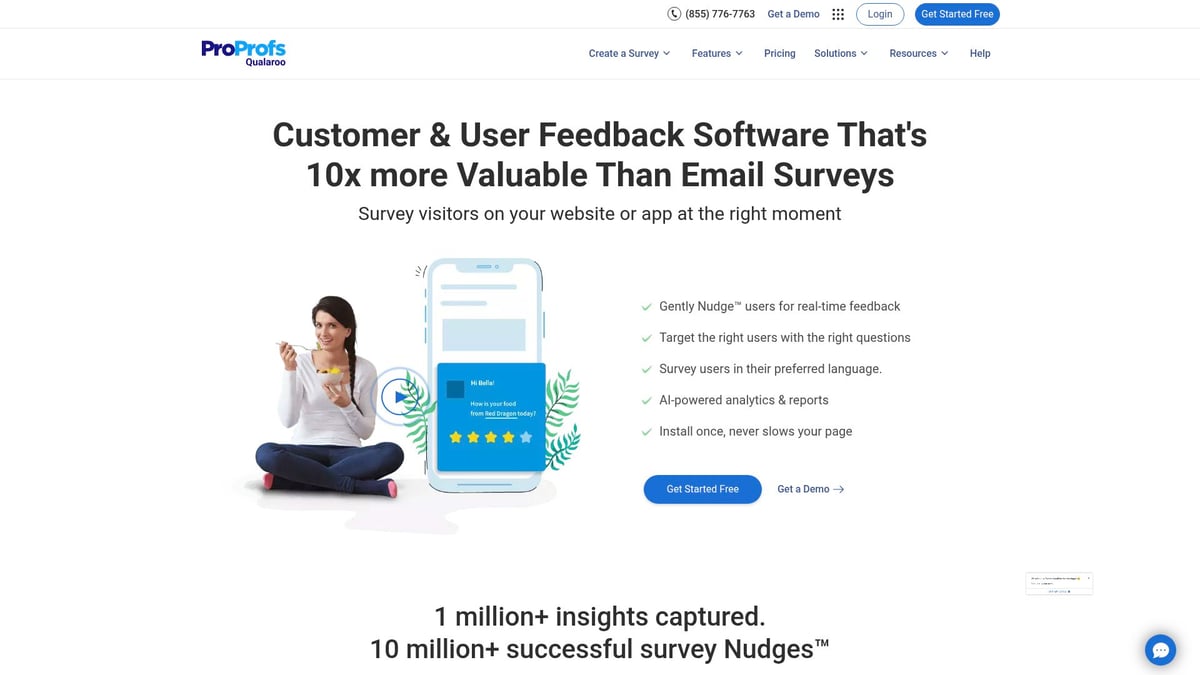
Qualaroo rounds out our list of customer retention tools with a focus on real-time feedback and sentiment analysis. Pricing starts at $80 per month for Essentials, with advanced plans available.
Core Features:
In-app and website surveys
Net Promoter Score (NPS) and sentiment analysis
Question branching and customizable templates
Benefits: Qualaroo enables businesses to collect actionable feedback at critical moments, identify churn drivers, and prioritize improvements that matter most to customers.
Target Audience: Product managers, UX researchers, SaaS, and e-commerce brands.
Use Cases:
Churn and exit intent surveys
Onboarding feedback collection
Feature request polling
Measuring CSAT and NPS
Pros: Behavior-triggered surveys, quick deployment, and actionable insights.
Cons: The user interface may require some adjustment; advanced features are behind higher-tier plans.
Example: A product team leveraged targeted feedback via Qualaroo, increasing experiment success rates by 25%.
Real-time feedback is essential to any suite of customer retention tools, and Qualaroo offers a highly effective, scalable solution.
How to Choose the Right Customer Retention Tools for Your Business
Selecting the best customer retention tools is a strategic process that can dramatically impact your growth and profitability. With so many options available, it is critical to approach your selection methodically. Start by understanding your business’s unique retention challenges, then evaluate each tool’s fit based on features, ROI, and scalability.
Assessing Your Business Needs and Goals
Start by identifying the primary pain points in your customer journey. Are you struggling with onboarding, feedback collection, or post-purchase engagement? Map out where customers drop off and determine which customer retention tools can address these gaps.
For e-commerce brands, aligning your tools with industry best practices is essential. Explore customer retention in e-commerce to understand how leading merchants tailor their tech stacks for loyalty and repeat business.
Key Criteria for Evaluating Retention Tools
When comparing customer retention tools, integration is vital. Ensure any new platform works seamlessly with your existing systems, such as your CRM, email marketing, or analytics suite.
Scalability matters if you anticipate growth, so choose solutions that can evolve with your needs. Also, assess usability. A tool should empower your team, not slow them down with a steep learning curve.
Balancing Features, Cost, and ROI
Analyzing the balance between price and value is critical. Compare the features of shortlisted customer retention tools against your must-have requirements and budget.
To maximize your investment, focus on tools that measurably increase retention and customer lifetime value. For deeper insights, see this guide on measuring customer lifetime value and how the right technology drives long-term profitability.
Implementation and Onboarding Best Practices
A successful rollout of customer retention tools starts with a clear implementation plan. Define key performance indicators and set realistic milestones to track progress.
Involve all stakeholders, including marketing, product, and support, to ensure smooth adoption. Lean on vendor support and available training resources to accelerate your team’s learning curve.
Combining Multiple Tools for Maximum Impact
No single solution covers every aspect of retention, so a layered approach often yields the best results. Combine analytics, feedback, and automation tools to build a holistic strategy.
For example, use onboarding solutions to reduce early churn, support platforms for timely assistance, and review management tools to boost social proof. Continuous monitoring and optimization are essential for sustained success with customer retention tools.
Future Trends in Customer Retention Technology
The landscape of customer retention tools is evolving rapidly as businesses prepare for 2025. Adapting to new technologies and changing consumer expectations is essential for brands that want to stay ahead. Here is a look at the future trends shaping the next generation of customer retention tools.
AI and Predictive Analytics
Artificial intelligence is transforming customer retention tools by predicting churn with greater accuracy. Machine learning models analyze behavioral data to identify at-risk customers in real time, allowing brands to intervene before loyalty drops. These solutions can personalize retention campaigns, recommend products, and optimize outreach timing. As a result, companies using customer retention tools powered by AI are seeing higher satisfaction and increased customer lifetime value.
Omnichannel and Real-Time Engagement
Seamless experiences across web, mobile, email, and social channels are now expected. Customer retention tools are enabling businesses to engage customers in real time, regardless of platform. This approach ensures consistent interactions and timely support, which is crucial as benchmarks for customer retention rates by industry continue to rise. Brands leveraging omnichannel strategies are outpacing competitors in both loyalty and referrals.
Integration and Automation
Unified platforms are becoming the norm, as businesses seek customer retention tools that combine analytics, feedback, and communication in one place. Automation features, such as triggered emails or proactive support messages, help brands scale retention efforts efficiently without losing the personal touch. Choosing customer retention tools with robust integration capabilities ensures data flows smoothly across all systems, driving smarter and faster retention decisions.
Customer Data Privacy and Trust
Customer expectations around data privacy are higher than ever. Customer retention tools are evolving to comply with regulations like GDPR and CCPA, focusing on transparency and ethical practices. Tools now offer enhanced consent management, data encryption, and privacy dashboards. Businesses that prioritize trust and security in their customer retention tools will build stronger, longer-lasting relationships.
The Rise of Community and Advocacy
Customer retention tools are increasingly supporting community-building and advocacy features. Modern platforms enable brands to activate ambassadors, showcase public reviews, and foster user-generated content. These strategies not only retain customers but also attract new ones through social proof. For actionable insights, see collecting customer feedback for retention, which highlights how feedback can fuel community engagement and advocacy.
Preparing for What’s Next
Staying agile is vital as customer retention tools continue to advance. Businesses should regularly evaluate emerging technologies, pilot new solutions, and measure their impact on loyalty. By keeping a finger on the pulse of innovation, companies can ensure their retention strategies remain effective and future-proof.
As you’ve seen, choosing the right customer retention tools can make all the difference in building loyalty and driving long-term growth in 2025. With platforms like Inflate simplifying everything from review collection to reputation management, you’re better equipped to turn feedback into real business impact. If you’re ready to see how these solutions fit your goals and want actionable insights tailored to your unique challenges, let’s connect and explore your options together.
Book a demo
and take the next step towards a stronger, more loyal customer base.


Une solution conçue pour les e-commerces
Découvrez les témoignages d’équipes qui ont simplifié la gestion de leurs avis et accompli plus avec moins.





Load More
